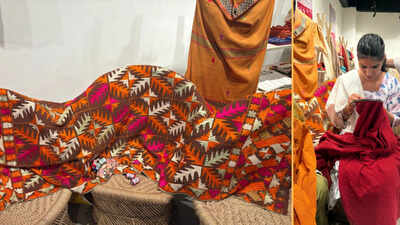
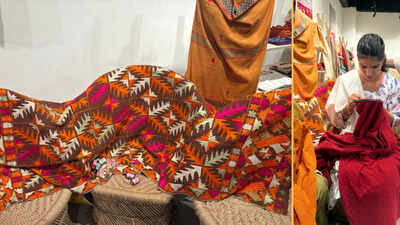
Gurmeet Kaur, 26, is dressed in a phulkari kurta she designed herself, jhumkas, clear block heels and aviator-style glasses. Just before the camera comes up, she pauses. “Wait,” she says, taking off the glasses before posing.For Gurmeet, who comes from a village near Nabha in Punjab, the moment is more than a photograph. She is among the women artisans associated with The Nabha Foundation who brought hand-embroidered phulkari to the foundation’s recent two-week exhibition at The Kunj.
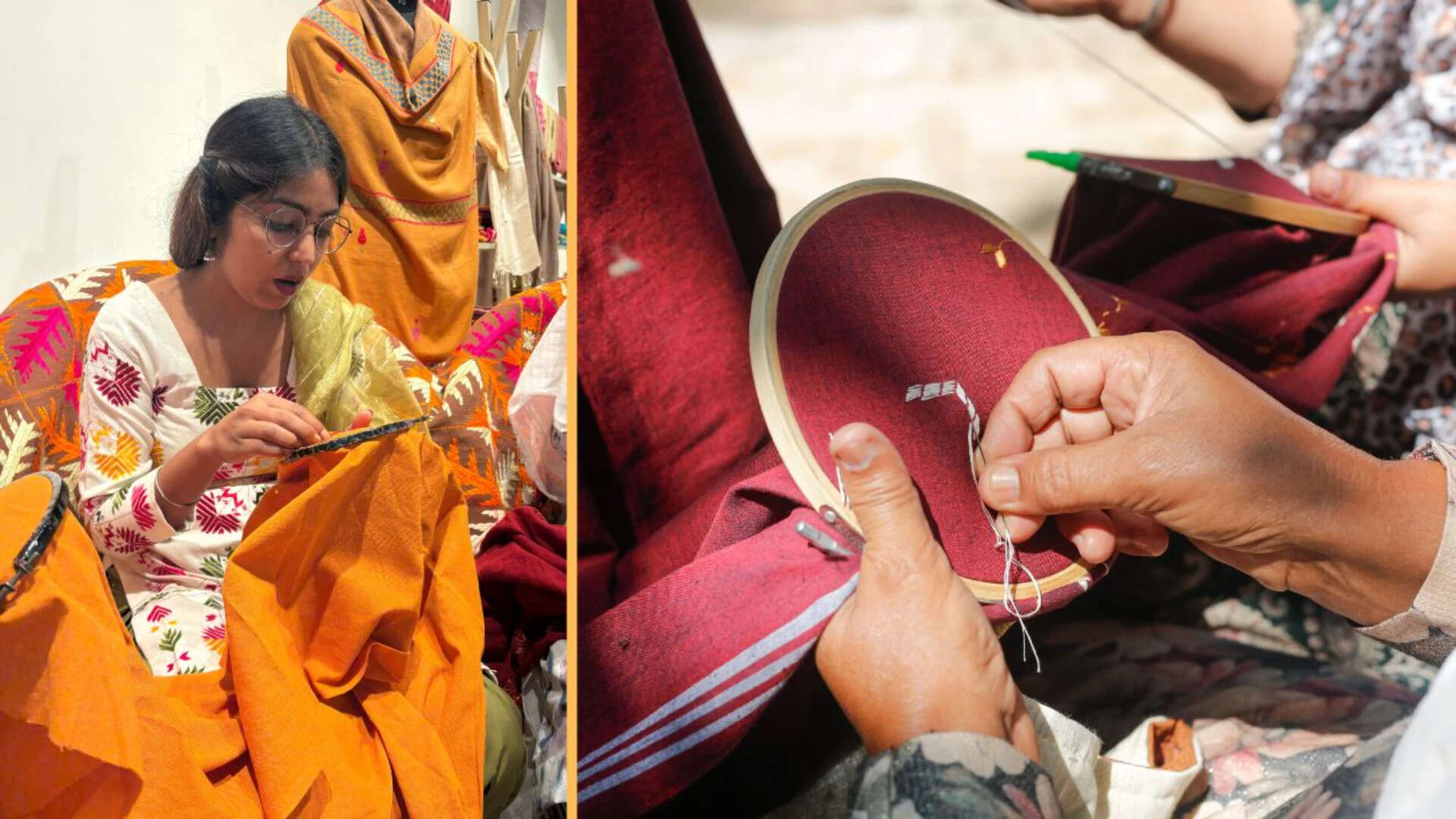
Gurmeet Kaur, a master phulkari artisan with Nabha Foundation, at the exhibition at The Kunj. (Pics: Asmitaa Aggaarwal)
Gurmeet Kaur, who is a master phulkari artisan with Nabha Foundation, is also making a phulkari for her own wedding. It carries the things that “speak” to her: lassi glasses, the word “Punjaban” embroidered in Gurmukhi script, and a man on the moon hoisting a flag. “It has taken me two years, but it is still a work in progress,” she says. She does not expect to inherit a phulkari from her mother or grandmother. So this one, she says, will be “a gift to myself”“This phone, my scooter – I bought them with my embroidery earnings. I also paid for my Master’s in political science from Punjabi University, Patiala,” says Gurmeet, who has been learning the craft for 12 years while pursuing her studies. She is now a master trainer and says she earns up to `15,000 a month – about as much as her brother. The income, she says, has won her a “little respect” at home. “They allowed me to come to Delhi. I am so excited to be here at The Kunj to showcase Nabha phulkari. I also got to see the city, which I would never have been able to do otherwise. My parents are very conservative. Most girls in my village cannot dream of this,” she says.Displayed around her are antique baghs (wraps or shawls with intricate phulkari embroidery on khaddar), sourced from artisan families in Punjab. Traditionally gifted to girls as shagun at the time of marriage, these densely embroidered textiles were often part of a woman’s trousseau, made by the older women in the family, laden with stories. “A bagh takes three months to make, sometimes even more,” says Vimmi Lekhi from the foundation. “The beauty of this craft is that it is still done the way our great-grandmothers did it – as a community bonding exercise.”Rajvinder Kaur, 44, who has been embroidering for 15 years, says the artisans do not always erase irregularities. If a pattern goes slightly awry, it is allowed to remain – as a celebration of imperfection. A tiny geometric motif can take her nearly half an hour – a useful measure of the patience behind an intricately embroidered bagh.
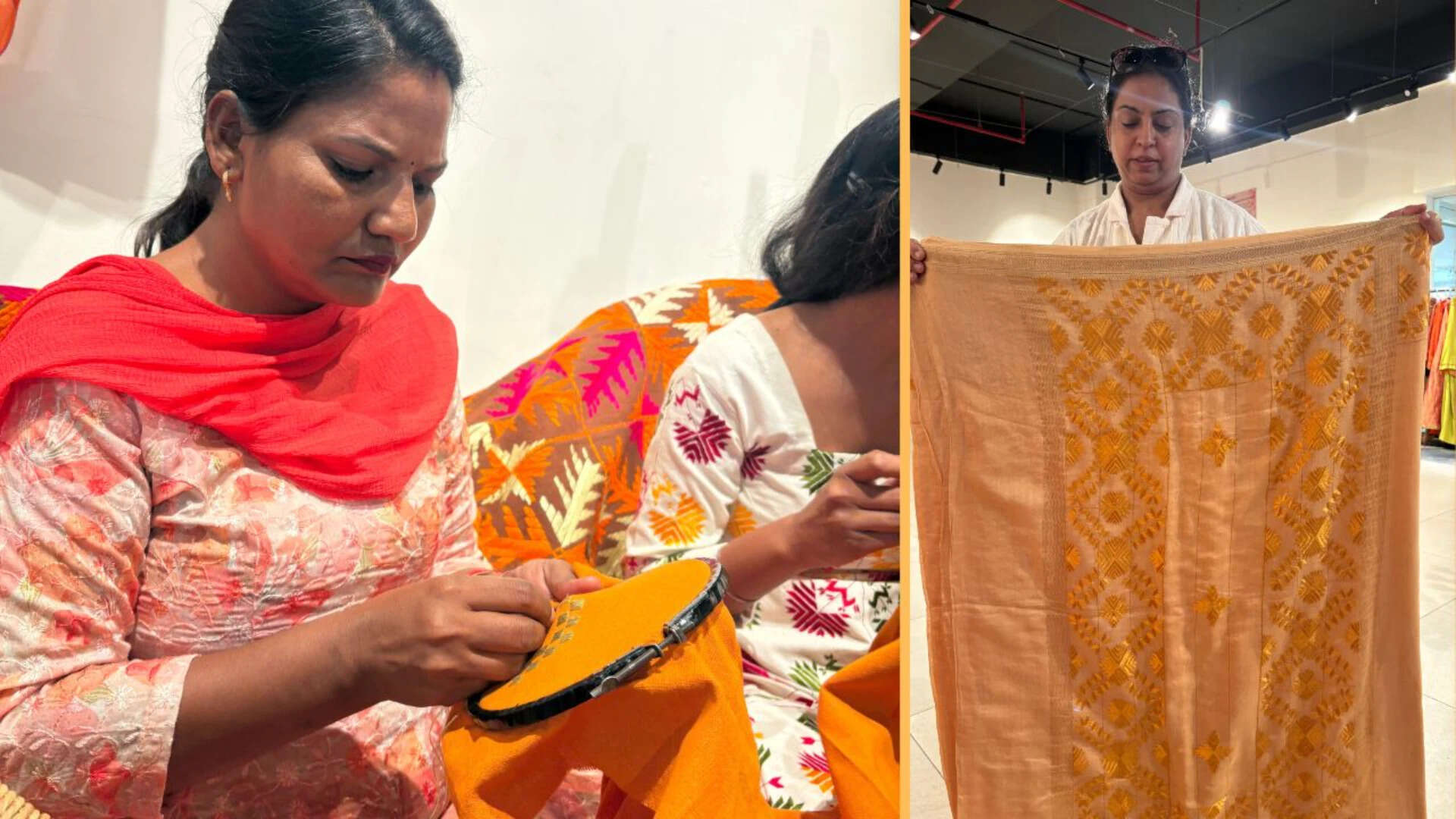
Rajvinder Kaur and Vimi Lekhi at The Kunj (Pic: Asmitaa Aggaarwal)
Written by Asmitaa Aggaarwal