






(RNS) — Earlier this month, the Southern Baptist Convention adopted resolutions opposing amnesty for undocumented immigrants and women in pastoral leadership roles.
The latest resolutions follow a decades-long trend toward conservatism. A new analysis by Boston University sociologist Nancy Ammerman found that Christian nationalist ideas have become the “lingua franca” of the denomination.
Ammerman, a BU professor emerita of sociology of religion, analyzed 91 SBC resolutions that were adopted primarily during U.S. presidential elections from 1972 to 2024, noting that “they often get more discussion on the floor than any other item of business.” Ammerman’s review found the nation’s largest Protestant denomination underwent a transformation from a “moderately progressive” organization to an increasingly conservative one.
“The evidence that the resolutions provide is very clear in terms of the kind of endorsement of the ideas of Christian nationalism that are present in the denomination,” said Ammerman, who wrote a chapter, “Southern Baptists and the Evolution of White Evangelical Politics” in a recently published book, “Understanding Christian Nationalism: Perspectives on the Political Religion of Trump’s America,” “and the way those ideas have come to be simply the lingua franca, if you will, the way the culture of this denomination has been shaped over the last generation.”
RELATED: Southern Baptists oppose amnesty, political violence, women pastors at annual meeting
In 1972, during the Vietnam War, one resolution recognized that “(b)oth conscientious participation and conscientious objections are undertaken as Christian attitudes in good conscience.” Another resolution that year called for welfare reform, citing “the dignity and worth of even the least and poorest.” Both urged Southern Baptists to seek action on those issues from the legislative and executive branches of the U.S. government.
As conservatives’ control of the SBC solidified in the 1980s and 1990s, Ammerman wrote, anti-abortion and anti-homosexuality stances became the norm, and “(q)uestions of world peace, hunger, poverty, and civil rights simply dropped out of sight.”
Election-related resolutions shifted from a 2004 resolution asking Christians to vote, after studying candidates’ platforms, “in accordance with biblical values,” to, in 2016, saying the Baptists “prayerfully urge all candidates for political office to endorse the biblical values upon which society should rest.”
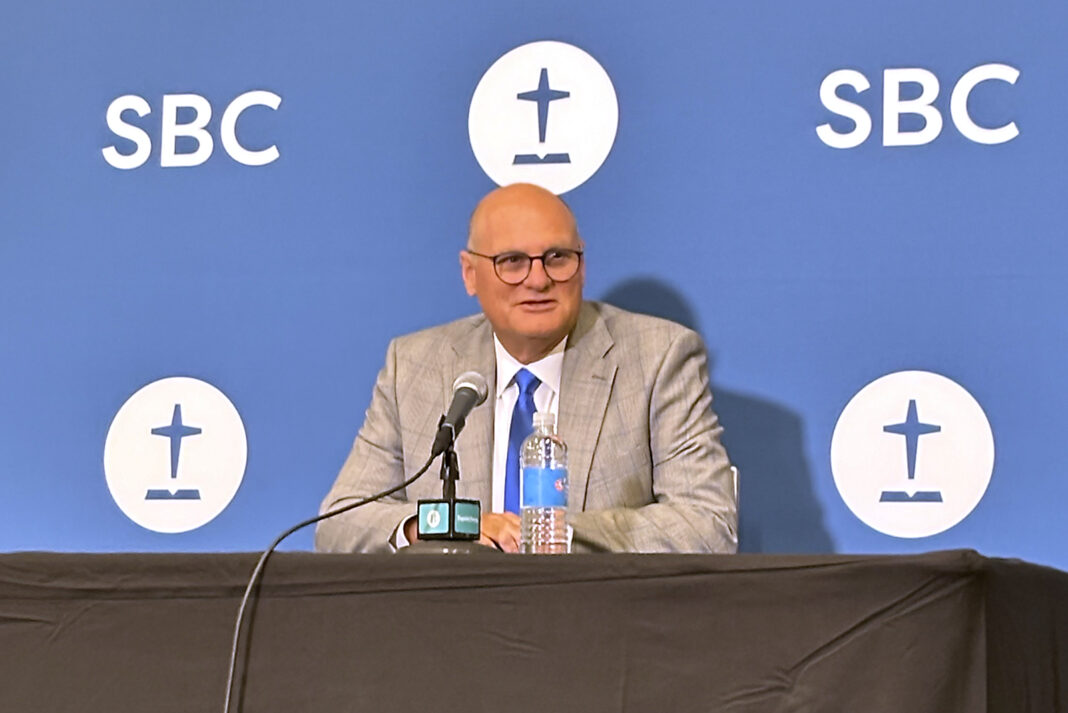
In response to a series of questions from RNS about Ammerman’s analysis, new SBC President Willy Rice provided a statement.
“The term Christian Nationalism has often been used as a pejorative term to intimidate Christians into silence on all moral and political matters,” said Rice, who was elected on June 9. “Southern Baptists have longstanding convictions on the role of righteous government in the pursuit of justice and truth. There is nothing new about seeking to influence government policy or even promoting representatives for public office who share our same convictions in matters of church and state.”
Ammerman said the resolutions also trace a change in the SBC’s previously long-held affirmation of church-state separation. In 2021, the Baptists adopted a resolution that came from the convention floor rather than the resolutions committee. After using language similar to previous resolutions about abortion, this one “goes on to declare that ‘God establishes all governing authorities as His avenging servants,’ and they should only be obeyed if they are obeying God’s higher law and not ‘iniquitous decisions.’”
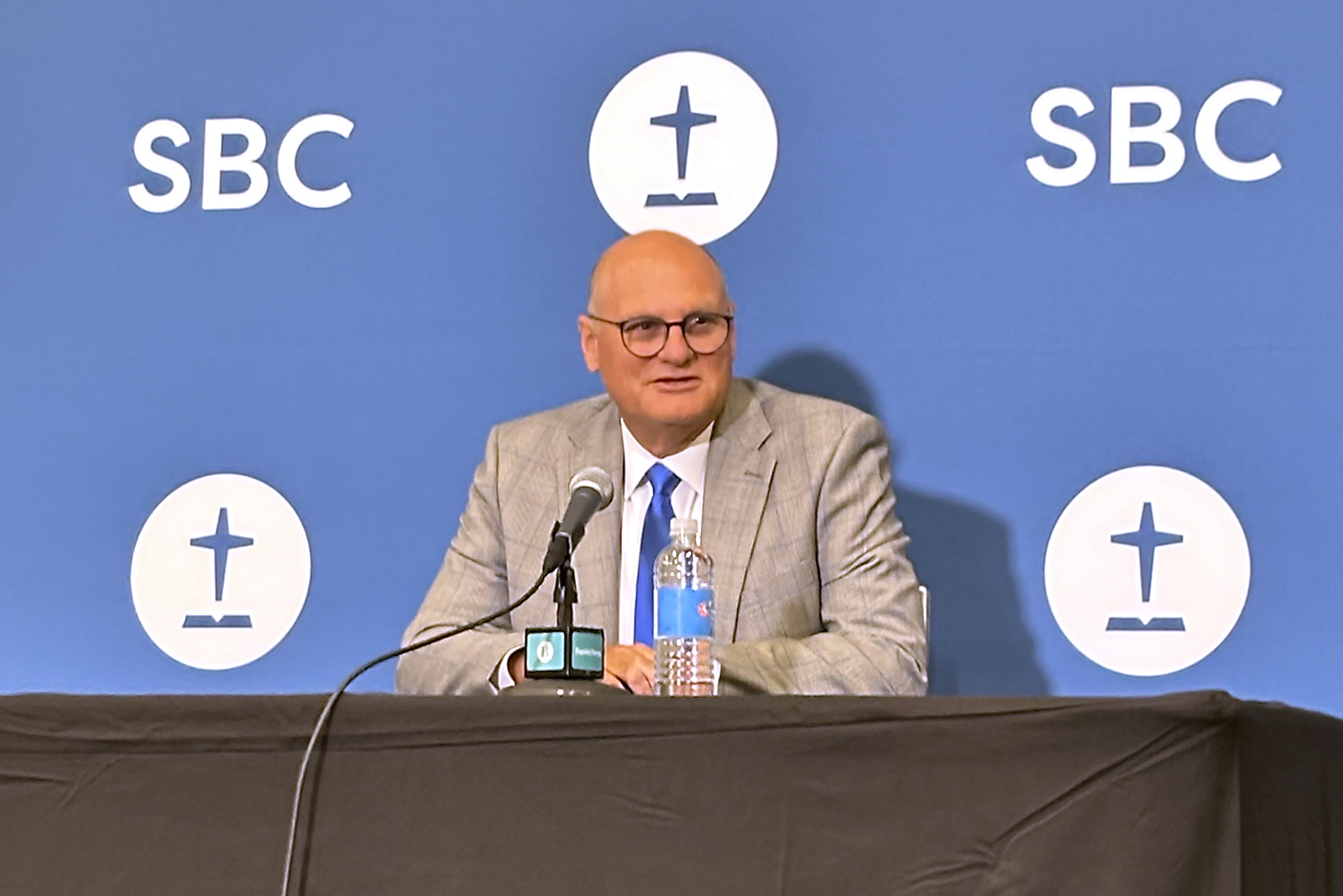
Southern Baptist Convention President Willy Rice speaks at a press conference, June 10, 2026, in Orlando. (RNS photo/Bob Smietana)
In an interview, Ammerman said previous resolutions spoke of organizing and advocating about their anti-abortion stance, but she said that cause, with the 2021 resolution, “gets transformed into advocating for the government itself to be an instrument of religious enforcement.”
The SBC also became increasingly supportive of more conservative legislation, Ammerman found.
At a 1993 gathering, the Baptists hailed the passage of that year’s Religious Freedom Restoration Act, which had been a bipartisan and interfaith cause, describing it as restoring “the careful balancing test for weighing claims of religious liberty infringement against a compelling government interest, using the least restrictive means.” At a 2021 meeting, Baptists opposed the Equality Act, which would amend the Civil Rights Act of 1964 to offer anti-discrimination protection for LGBTQ+ Americans, as a “governmental punishment against faith-based charities for serving the common good according to their cherished beliefs.”
Ammerman wrote: “As Congresses came and went, Southern Baptists were often worried that the laws of the land would limit their ability to operate institutions, schools, and businesses according to their own moral conscience — even when serving a diverse public.”
Ammerman said the change in some of the language used was striking.
“Every resolution basically has to have a listing of all of the evil forces in society that are being arrayed against them,” she said in an interview.

Messengers vote during the Southern Baptist Convention annual meeting, Wednesday, June 10, 2026, at the Orange County Convention Center in Orlando. (RNS photo/Bob Smietana)
The resolutions also lengthened with more Bible verses to back up the sentiments in the statements.
“Justifications based on older ‘Baptist principles’ and appeals to common good were outnumbered by citations of ‘biblical values,’” she wrote. “Each ‘whereas’ and ‘be it resolved’ was accompanied by multiple citations of Bible verses to prove its point.”
Ammerman notes, however, that there were attempts to address racial issues from a “seemingly progressive” perspective. One prominent example was the 1995 “Resolution on Racial Reconciliation on the 150th Anniversary of the Southern Baptist Convention” in which the Baptists, whose denomination was founded in a defense of slavery, said at their gathering that year that “we recognize that the racism which yet plagues our culture today is inextricably tied to the past.” But by 2021, a resolution subordinating critical race theory to Scripture passed, and the debate prompted some prominent Black pastors to leave the denomination.
Rice, who has called critical race theory “disturbing and concerning,” said it is fitting that Southern Baptists have been outspoken on gender, marriage and other cultural issues.
“Southern Baptists haven’t become more political; rather, political issues have become increasingly theological on matters we can’t afford to remain silent on,” Rice said. “Southern Baptists believe that the Bible is true and that God has spoken with clarity, love, and wisdom in each of those areas for our good and the good of all society.”
RELATED: Willy Rice, Florida pastor and abuse crisis skeptic, elected SBC president