






(RNS) — The Supreme Court on Thursday (June 11) prevented Alabama from executing a man who became a Christian ministry leader during his 26 years on death row, deciding that killing him using nitrogen gas was unconstitutional.
Jeffery Lee, who is imprisoned for the murder of two people, elected in 2018 to be executed by nitrogen hypoxia over lethal injection. But following the method’s first use in 2024, he was among several Alabama inmates to file lawsuits challenging the constitutionality of nitrogen suffocation. After two lower court rulings blocked the method this week, deeming it cruel and unusual punishment, NBC News reported that the Supreme Court denied the state’s request to execute Lee yesterday evening.
Lee was convicted of fatally shooting Jimmy Ellis and Elaine Thompson during a pawn shop robbery outside Selma, Alabama, in 1998. Lee’s trial lasted two days, and in a 7-5 vote, the jury chose a sentence of life imprisonment without parole. Yet, in a move that has defined Alabama criminal court proceedings, the presiding judge sentenced Lee to death. Alabama is one of three U.S. states that have historically permitted judicial override, a process that grants judges the power to overrule a jury’s decision.
In Alabama, judicial override has disproportionately sentenced defendants to death. A 2011 Equal Justice Initiative report revealed 21% of the state’s death row inmates were sentenced to death through judicial override, contributing to the state’s highest per capita death sentencing and execution rate in the country.
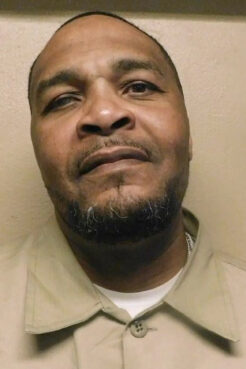
Jeffery Lee, in an undated photo. (Photo courtesy of the Alabama Department of Corrections)
In 2017, Alabama became the last state to abolish judicial override, but the decision did not retroactively apply to previous sentences.
Since being sentenced in 2000, Lee has been held in William C. Holman Correctional Facility in Atmore, Alabama. In that time, he became a ministry leader through Kairos Prison Ministry International, a Christian nonprofit headquartered in Florida that aims to serve the spiritual needs of inmates and is supported by volunteers.
According to The Campaign for Clemency for Jeffery Lee’s website, he was selected for the leadership role by Kairos ministry — a decision the campaign said reflected his “tremendous transformation” and potential to serve as a “positive influence” on others. He has since mentored other incarcerated men on death row, the group said.
“Jeffery is not the same person he was decades ago,” the campaign states. He “did not walk into the Holman Correctional Facility a man of faith. That came later and it came slowly — from the inside out.” The campaign’s website also links several Holy Week sermons delivered by Lee.
The campaign argues Lee’s execution should be prevented on the grounds of his moral and spiritual transformation, in addition to his turbulent upbringing and a traumatic brain injury that they claim impacted his early life and subsequent crime.
Kairos declined an RNS request to comment on the case.
In Alabama, lethal injection is the default execution method for those incarcerated on death row, but in recent years, the state has come under criticism for several botched attempts. In response, Alabama pioneered death by nitrogen suffocation in 2024. The method requires strapping an inmate to a gurney, placing a mask on their face, and releasing nitrogen to restrict oxygen. Prior to its first application in 2024, the method had never been tested.
The decision to experiment with nitrogen suffocation drew international alarm. Before Alabama executed its first inmate via nitrogen suffocation, Kenneth Smith, United Nations experts expressed concern that the new method could cause immense suffering and amount to torture. Smith reportedly convulsed and writhed for 20 minutes before he died. Afterward, U.N. Human Rights experts called for an urgent ban on the practice.

The U.S. Supreme Court is seen Friday, April 17, 2026, in Washington. (AP Photo/Mariam Zuhaib)
Since then, Alabama has executed seven inmates via nitrogen suffocation. The majority vigorously struggled for several minutes, and many took between 16 and 32 minutes to die. Last year, the execution of Anthony Boyd became the longest recorded death by nitrogen suffocation, totaling 38 minutes.
Lee’s lawsuit noted that the method causes extreme suffering and claimed he would rather die by firing squad.
Following a lower court ruling earlier this week, Lee told NBC News, “Fear not, I am not finished, and just, you know, to me, my faith is everything.” The state then appealed the decision to the Supreme Court.
As Lee’s case has entered the national spotlight, several religious leaders have argued against Lee’s execution and advocated for clemency. Retired Brigadier Gen. Carlton Fisher, who served as a chaplain in the U.S. Army Reserve and the Federal Bureau of Prisons and holds a doctorate in ministry, published an op-ed last week criticizing Alabama’s history of judicial override. In Lee’s case, Fisher argued, Alabama should “honor the decision of the jury” that “chose life.”
Similarly, Drayton Nabers, Jr., former chief justice of the Alabama Supreme Court, published an op-ed urging Alabama to honor the jury’s vote.
Though not explicitly mentioned, Fisher and Nabers’ writing both invoke a scriptural mandate in Deuteronomy 30:19 to “choose life.” The biblical mandate has been made well-known by Christian anti-abortion activists in the United States.
In a statement more clearly grounded in theology, the Catholic Mobilizing Network urged Gov. Kay Ivey and the Alabama Bureau of Pardons and Paroles to grant Lee clemency, calling capital punishment “an act of state sanctioned violence that violates the sacred dignity of every human life.” CMN has long taken a theological stance against legal execution.
A social media account supporting Lee’s clemency released an emotional video Thursday evening in which Lee can be heard telling his mother, “I won,” to which his mother replied: “Thank you, Jesus.” “Let them know what God did,” Lee can later be heard saying.
But for supporters of Lee’s clemency, the battle continues. In a statement given to NBC, Ivey said the state still plans to reschedule Lee’s execution. “I remain committed to ensuring that justice is ultimately served for his victims,” she stated.