



(RNS) — The U.S. Supreme Court issued a decision on Wednesday (April 29) that struck down a key provision of the Voting Rights Act, making it nearly impossible to challenge racially discriminatory voting maps without proving intentional discrimination. Hours after the ruling, Florida’s Legislature approved a new congressional map, skewed in Republicans’ favor, and many experts are predicting a historic drop in Black representation in Congress — and much longer lines for Black voters.
None of this is surprising. The history of civil rights in America is one in which there is progress followed by retrenchment, expansion followed by restriction.
In 1870, the 15th Amendment promised that the right to vote could not be denied on account of race. Within a generation, that promise was hollowed out by poll taxes, literacy tests and racial terror. Nearly a century later, there was the Voting Rights Act of 1965 — recognizing that discrimination in voting was systemic and required federal oversight of states with histories of disenfranchisement. Black voter registration surged. Representation followed. And then, again, the retrenchment.
In 2013, the Supreme Court’s decision in Shelby County v. Holder invalidated the formula that determined which jurisdictions needed federal preclearance before changing voting laws.
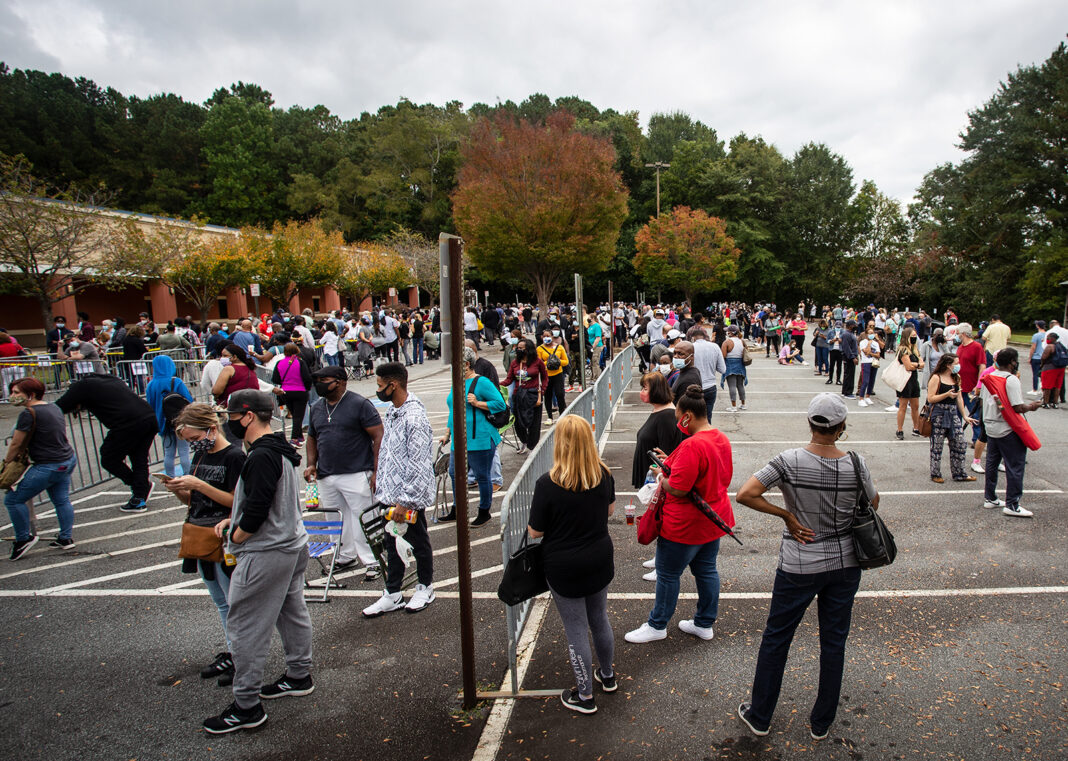
Now, we have a further stripping away of the Voting Rights Act. For Black voters, it will mean longer lines at the polls, fewer accessible locations, more bureaucratic hurdles and a greater risk that their lawful vote will not be counted.
This is the cycle.
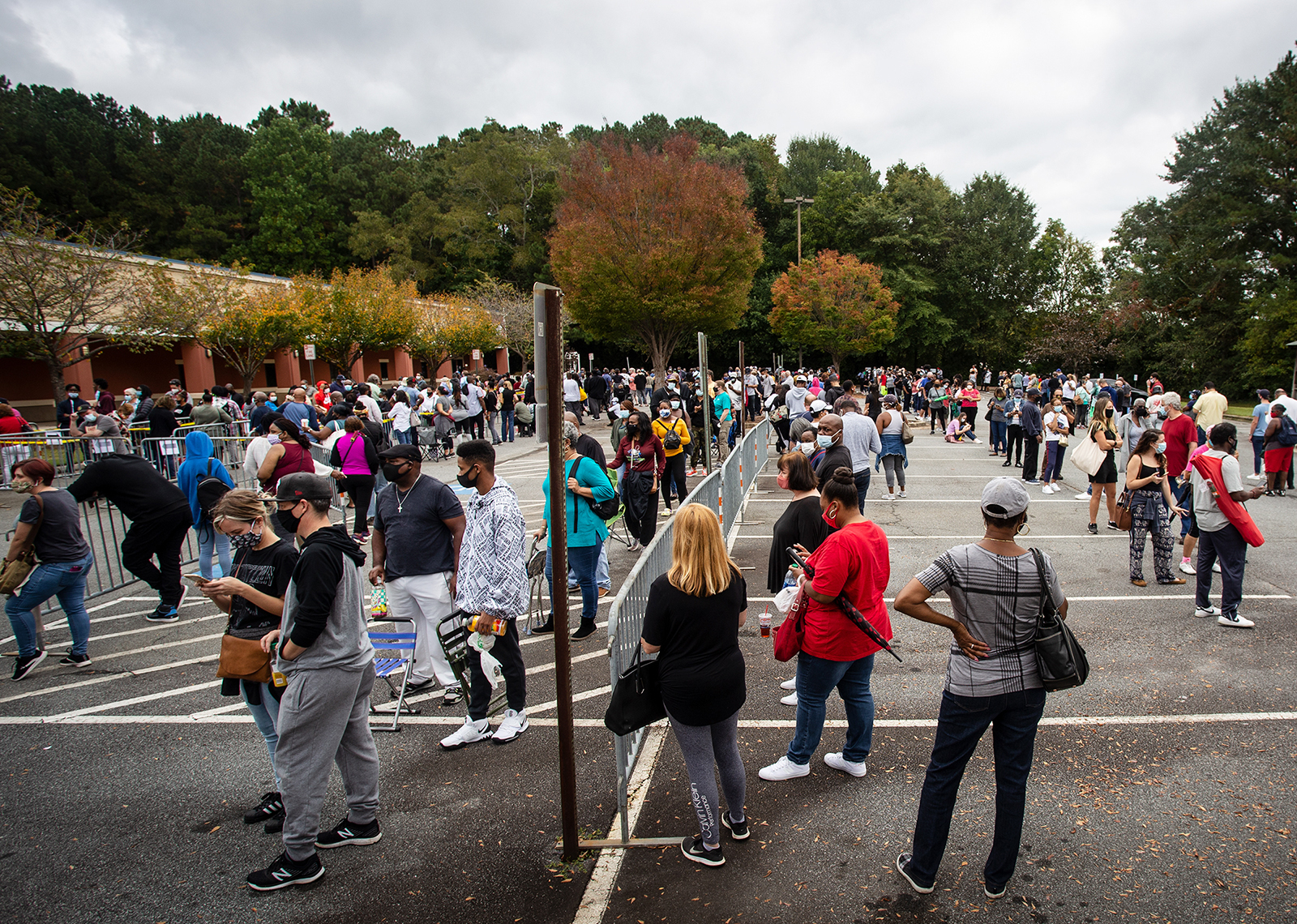
Hundreds of people wait in line for early voting in Marietta, Ga., on Oct. 12, 2020. (AP Photo/Ron Harris, File)
What we are witnessing is not simply a legal debate. It is a recurring struggle over the meaning of democracy itself.
But let’s be clear: Black voters will persist. They always have. And churches have always been critical and will be today.
The Black church was forged from faith in a vision of freedom that was not yet realized. Our faith still lives in the tension of “what shall be” and “what has not yet come to pass.”
After Reconstruction, restrictions were justified in the language of “state authority” and “election integrity.” After the Civil Rights Movement, resistance came cloaked in claims of “neutral rules” and “administrative efficiency.” Today, similar arguments reappear updated, reframed, but rooted in the same tension: who gets full access to the ballot, and who must fight harder for it.
Resistance must operate on three fronts simultaneously: spiritual (moral clarity and motivation); structural (organized systems of turnout); and adaptive (responding in real time to suppression tactics). And in this season, preaching and teaching still matter — not partisan messaging, but theological framing of voting as moral agency.
There is a lot that can be done — and is being done. Establish monthly “check your registration” Sundays as a faithful act of witness. Instead of concentrating turnout on Election Day, churches push early voting and encourage designated voting days, with transportation, to reduce vulnerability to last-minute disruptions. Some churches are already partnering with civil rights attorneys and election protection coalitions to create rapid-response systems when voters are challenged.
If the strategy is to exhaust voters, then the counterstrategy is to sustain them.
Faith-based coalitions, such as Faiths United to Save Democracy, already have an initiative to recruit faith leaders across religious traditions to serve as poll chaplains. Organizations like Operation Push provide legal literacy sessions on rights at the polls. Networks like Black Voters Matter, Higher Heights, Win with Black Women, Black Church Freedom Fund and Faith in Action are galvanizing voter registration and other civic efforts that are decentralized and harder to suppress.
We have, quite literally, been here before, and each time the Black church did not simply encourage participation. We enabled it. The question is not whether Black voters will respond. The question is whether the church will fully remember who it has always been.
Every generation faces moments that test the meaning of citizenship. For Black Americans, those moments have often centered on the ballot. And yet, the story has never ended with setbacks. We have moved forward before. The struggle for a truly representative democracy does not end at the court.
It continues — organized, vigilant and unyielding.
(The Rev. Traci D. Blackmon is the founder of Faith Out Loud!, an ecosystem working to turn faith into public action, advocating for justice, community empowerment and prophetic witness rooted in the Black church. She previously was associate general minister in the United Church of Christ and is based in St. Louis. The views expressed in this commentary do not necessarily represent those of Religion News Service.)